
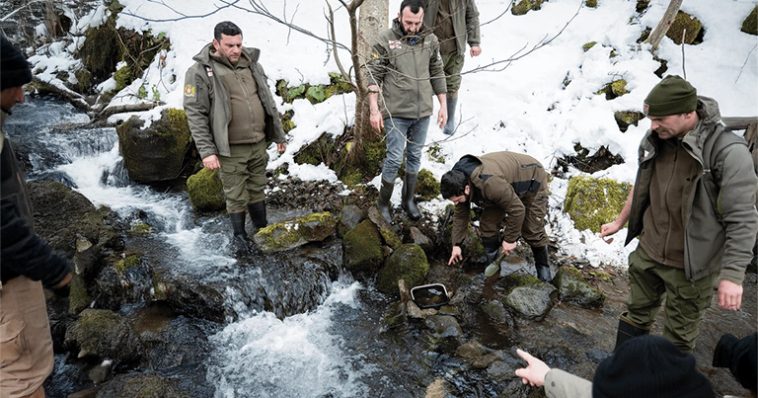
In Sairme, the first stage of fish stocking has been completed as part of the historic Sairme Recreational Farm project, carried out in cooperation with the National Wildlife Agency. Approximately 30,000 red-spotted trout eggs at the eye stage of development were released into one of the tributaries of the Tsablari River.
Irakli Gorgodze, Director of Sairme Recreational Farm, stated:
“For the first time in Sairme’s history, we have restocked the river as part of the Sairme Recreational Farm project. This is a project of great responsibility for us, we’ve taken on the care and protection of 13,000 hectares of forest. I’m proud that we’ve already taken the first steps, and very soon, red-spotted trout will appear in the river’s ecosystem.”
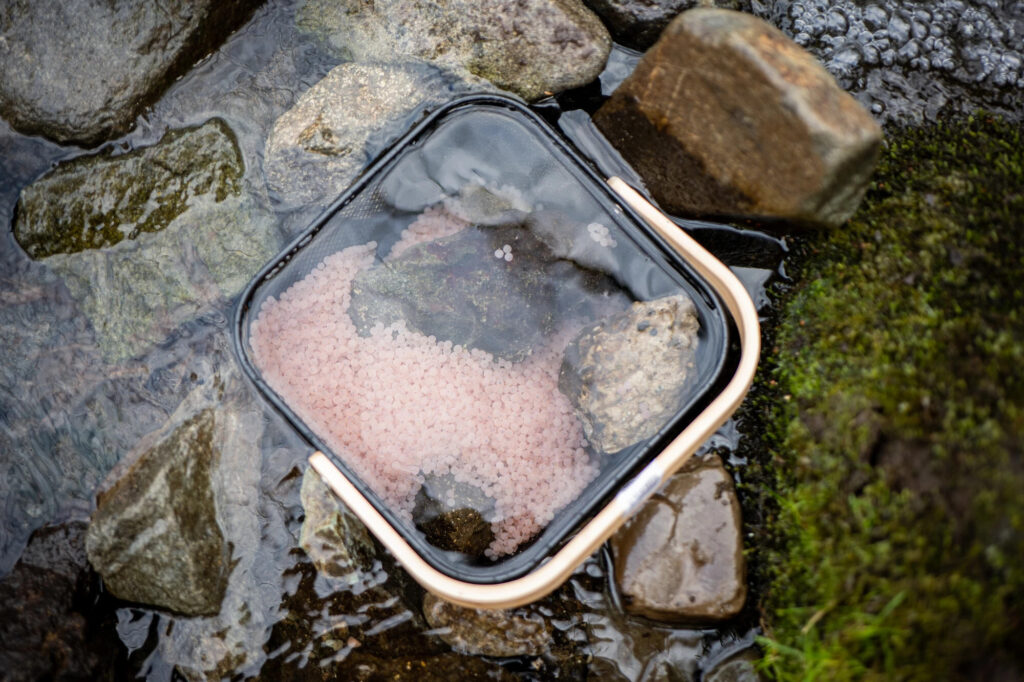
The fish stocking process is part of the large-scale and historic project currently underway in Sairme. For the first time in history, a farm will be established on the territory to breed Caucasian red deer and chamois. The investor also plans to support the repopulation of mountain trout in the rivers of Vani and Baghdati. Over the next five years, the project will see an investment of no less than 4 million GEL.
A number of important steps have already been completed. At this stage, six rangers and one specialist are employed at the Sairme Recreational Farm, working to ensure the protection and sustainable development of the 13,000-hectare territory.

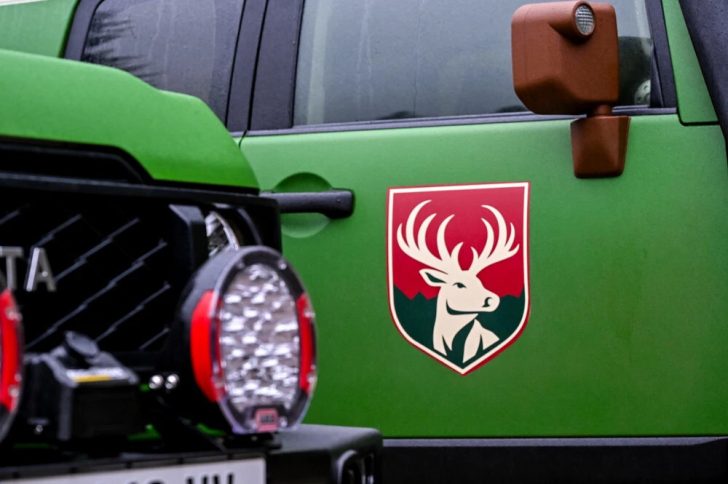
The rangers will be provided with various means of transportation for on-site mobility, including quad bikes, horses, and off-road vehicles. They will also be equipped with branded uniforms to represent the Sairme Recreational Farm.
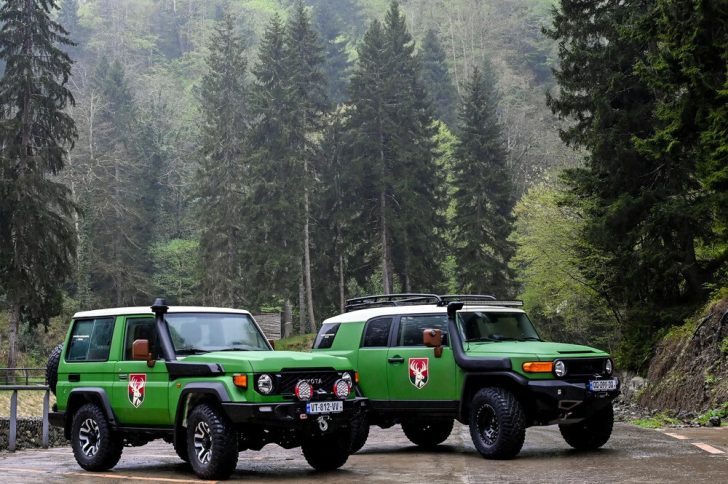
As part of the project, 10 camera traps have already been installed, with plans to triple that number in the near future. Additionally, the farm has acquired three off-road vehicles and two buggies to support field operations and monitoring across the vast forested territory.
Within the framework of the project, the territories of Vani and Baghdati will see the development of eco-tourism, as well as educational, recreational, and adventure tourism. For visitors, tourists, and local residents, modern recreational spaces will be built, including first aid medical stations and cottages that meet contemporary standards.
The area will maintain a high level of safety, while still allowing visitors to move freely through the forest. The project also includes the restoration of damaged forest areas and the regular provision of food for animals, birds, and fish to support the local ecosystem.
For both locals and tourists, access roads leading to the farm and internal routes will be developed and improved. Additionally, horseback riding and hiking trails will be created, along with roads suitable for fire and rescue vehicles. The territory will be equipped with a comprehensive fire safety system.
Furthermore, mobile network coverage across the area will be expanded, significantly improving telecommunication and internet connectivity for all visitors and residents.
In addition, educational programs related to wildlife reproduction and conservation will be held regularly for the local population, helping to raise awareness and encourage community involvement in environmental protection.
Importantly, local residents will retain full access to the forest and will continue to be able to carry out any activities permitted by law within the territory. This approach ensures that conservation efforts go hand in hand with the rights and interests of the local community.